


Short answer: it depends on how real your listing plan is. If you intend to list within the next five years, you should be moving towards MFRS now — the financial years a regulator will examine are the ones you are living through today. If a listing is genuinely uncertain, you may lawfully remain on MPERS, because the obligation to apply MFRS only bites when the listing application is submitted. But do not assume that is the cheaper path until you know what MFRS would do to your numbers.
The Short Version, for Directors
- If you intend to list within five years, start moving towards MFRS now. The accounts a regulator will read are the ones you are preparing today.
- You may lawfully stay on MPERS in the meantime. Deferring the IPO creates no obligation to change — but that is a question of timing, not a settled answer.
- Your track record has already started. An IPO prospectus shows three years of accounts prepared under MFRS. For a listing five years out, the first of those years begins in roughly 24 months.
- Converting changes your numbers, not just your paperwork. Profit, gearing and EBITDA all move — sometimes materially, and not always in the direction you would like.
- The number that matters most is your profit under MFRS, not under MPERS. The Securities Commission tests your listing eligibility on the converted figures. Companies do pass on MPERS and fail on MFRS.
- The bar was raised in June 2026. The Main Market profit test now requires RM15 million in your latest year, up from RM6 million — so a conversion adjustment that used to be survivable may no longer be.
- Converting and then reversing is the most expensive outcome of all. Coming back to MPERS later means redoing the accounts without the one-off reliefs you already used.
- Whichever way you lean, quantify it first. The one step that is right in every scenario is to find out, on paper, what MFRS would do to your profit, your gearing and your listing eligibility — before you commit to converting or to waiting.
Do You Legally Have to Convert Right Now?
Many Malaysian companies have put well-advanced IPO plans on hold. Some had already begun converting to MFRS; others stopped short, and are now asking a fair question — if we are not listing this year, why pay to change our accounting framework?
The legal answer is straightforward: no, you do not have to — provided your company still qualifies as a private entity. In Malaysia that means a private company incorporated under the Companies Act 2016 that is not required to lodge financial statements under any law administered by the Securities Commission Malaysia (SC) or Bank Negara Malaysia (BNM), and is not a subsidiary or associate of a company that is.
A private entity may use MPERS (the Malaysian Private Entities Reporting Standard) or MFRS (Malaysian Financial Reporting Standards, which are identical to international IFRS). It must pick one and apply it in full.
The moment you submit a listing application, you stop being a private entity — and so do your subsidiaries. MFRS becomes mandatory. Until then, it is your choice.
The Trap: Your Track Record Has Already Started
This is the point most boards miss, and it is the reason “we will deal with it closer to the time” is a costly instinct.
An IPO prospectus must present your last three full financial years of accounts, prepared under MFRS, presented consistently. You cannot show two years on MPERS and one on MFRS. Whatever framework you are using now, those three years will eventually be restated onto MFRS — retrospectively.
Count backwards from a listing five years away:
| What happens | When |
|---|---|
| You list | Year 5 |
| The three years of accounts the regulator reads | Years 2, 3 and 4 |
| The opening balance sheet those accounts are built on | Start of Year 2 |
| Realistically, when the work has to begin | Year 1 — about now |
So a “five-year plan” gives you roughly one to two years of real breathing room, not five. You can still convert later and restate the history — it is legal and it is done all the time. It is simply slower, more expensive, and more likely to throw up a surprise, because you will be reconstructing evidence that is by then several years cold.
If You Convert to MFRS, What Actually Changes?
Not the underlying business. Not the cash in the bank. What changes is how that business is measured and presented — and those measurements are what banks, investors and regulators read.
| What you look at | What typically happens under MFRS | Why |
|---|---|---|
| Reported profit | Moves — in either direction, sometimes by a lot | Several measurement rules change at once; the net effect depends entirely on your business |
| Borrowings and gearing | Usually higher | Rented shops, warehouses, offices and vehicles become a liability on your balance sheet, even though nothing about the rental has changed |
| EBITDA | Usually higher | Rent stops being an operating expense and becomes depreciation plus interest. Helpful for valuation multiples |
| Early-year profit on leased assets | Usually lower | The same total cost is recognised, but weighted towards the earlier years of the lease |
| Revenue | Timing can shift; some groups must report net instead of gross | Stricter rules on when a sale is earned, and on whether you are the principal or an agent |
| Bad debt provisions | Usually higher | You must provide for losses you expect, not only losses that have already happened |
| Audit and compliance cost | Higher, permanently | More disclosures, more valuations, more specialist input every single year |
Which businesses feel it most
- Retail, F&B and logistics groups, or anyone with many rented premises or vehicles — the lease rules are the biggest single change, and they hit gearing hardest.
- Groups that have made acquisitions — goodwill stops being written off each year, lifting profit, though the original acquisition may need re-analysis.
- Technology, engineering and manufacturing groups developing their own products — development spending MPERS forces you to expense may qualify to be capitalised, lifting profit and net assets.
- Property developers and infrastructure groups — interest on project borrowings is treated differently, moving both profit and asset values.
- Any company that has issued shares or options to staff or directors — a scheme granted under MPERS can produce a sizeable catch-up charge on conversion.
- Any company with long-term or multi-element customer contracts — the point at which revenue is recognised may move.
The One That Catches Boards Out: The Listing Profit Test
This test became significantly harder in 2026, which is precisely why the MPERS-or-MFRS question has become more urgent rather than less.
Under the Securities Commission’s Equity Guidelines, a company listing on the Main Market through the profit test must now show an aggregate after-tax profit of at least RM30 million over its most recent three full financial years, including at least RM15 million in the latest financial year. Until 3 June 2026, those thresholds were RM20 million and RM6 million, measured over three to five years.
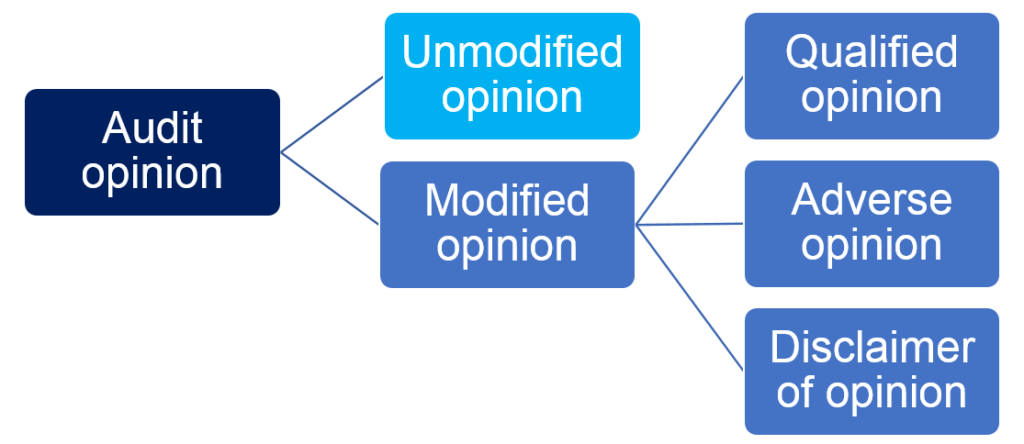
The most recent year requirement has therefore risen two and a half times. In the same revision the SC removed the requirement for profits to be uninterrupted, and added a requirement that the audited financial statements carry an unmodified audit opinion with no material uncertainty relating to going concern.
Three consequences follow for any board weighing MPERS against MFRS.
- The test is applied to your MFRS figures — the restated ones — not the MPERS figures your board reviews each month.
- A smaller adjustment is now enough to disqualify you. When the hurdle was RM6 million, a few million in lease or provision adjustments was survivable. At RM15 million in a single year, with only three years counting instead of five, the same adjustment can be decisive.
- Audit quality is now a listing criterion in its own right. A late conversion that surfaces an impairment, a valuation problem or a covenant breach risks a modified opinion or a going concern paragraph — which is now, by itself, a bar to listing.
A group can track comfortably above the threshold on its current accounts, convert, and find the restated profit sits below it. The usual causes are lease accounting, expected credit loss provisions and revenue timing. By the time this surfaces in the year of submission, there is nothing to do about it but postpone.
Finding this out three or four years early is cheap. Finding it out in submission year is not.
Does This Apply to the ACE and LEAP Markets Too?
The June 2026 profit test changes apply to the Main Market only. Neither the ACE Market nor the LEAP Market has a profit test or a minimum operating track record requirement — but that is widely misread as meaning the financial bar is low. It is not, and two things follow that matter directly to this decision.
| Main Market | ACE Market | LEAP Market | |
|---|---|---|---|
| Who it is for | Established companies | Growth companies, any size or sector | Smaller companies and start-ups; currently restricted to sophisticated investors |
| Profit or track record test | RM30 million over three years, RM15 million in the latest year | None. A Sponsor assesses suitability and must justify the applicant’s prospects | None. An approved Adviser assesses suitability |
| Audited accounts must be clean | Yes — unmodified opinion, no material uncertainty on going concern | Yes — from 3 June 2026 a Sponsor must reject an applicant whose latest audited accounts carry an adverse, qualified or disclaimer opinion, or a going concern material uncertainty | Assessed by the approved Adviser |
| Management continuity | Required over the track record period | Required over the most recent three full financial years | Adviser assessment |
| Continuing sponsor or adviser | Not required | Sponsor required for at least three full financial years after listing | Continuing Adviser required for at least three years |
| Applicant must be a public company | Yes | Yes | Yes |
| Accounting framework | MFRS | MFRS | MFRS |
| Changed in June 2026? | Yes — profit test raised, audit opinion requirement added | Yes — sponsor exemptions removed, management continuity tightened, audit opinion bar added | Not yet. The “LEAP 2.0” proposals were consulted on until 15 June 2026 and are not in force |
First: no listing route lets you keep MPERS
MPERS is available only to a private company as defined in section 2 of the Companies Act 2016. An applicant to any of the three markets — Main, ACE or LEAP — must be a public company. There is therefore no listing route in Malaysia that avoids MFRS. What changes between the markets is the financial hurdle you must clear, not the framework you must report under.
Second: no profit test does not mean no financial scrutiny
This is the part that catches people out. From 3 June 2026, an ACE Market Sponsor must reject an applicant whose latest audited financial statements carry an adverse opinion, a qualified opinion, a disclaimer of opinion, or a statement of material uncertainty relating to going concern.
So a rushed MFRS conversion that surfaces an impairment, a valuation dispute, a covenant breach or a going concern question can end an ACE Market listing just as effectively as failing the Main Market profit test. The mechanism is different; the outcome is the same.
The practical difference is this. On the Main Market, an MFRS conversion that reduces your profit can make you ineligible. On ACE or LEAP, it is primarily a valuation and credibility problem — unless it is severe enough to affect the audit opinion, at which point it becomes an eligibility problem there too.
There Is a Second Deadline Nobody Talks About: Your Bank
Banking covenants — gearing ratios, interest cover, minimum net worth — are almost always drafted against whatever framework you report under today.
Because MFRS brings lease liabilities onto the balance sheet and tends to increase provisions, a conversion can push a company through a covenant threshold without a single thing changing in the actual business. This is manageable, but only if the bank is spoken to before the conversion, not after the first set of converted accounts lands on their desk.
This applies whether or not you ever list. It is one of the strongest reasons to quantify the impact early rather than convert first and discover the consequences afterwards.
Convert to MFRS Now, or Stay on MPERS?
The same decision, set out against the things a board actually weighs.
| What it affects | Convert to MFRS now | Stay on MPERS for now |
|---|---|---|
| Your IPO track record | Built correctly from day one — no restatement, no surprises at submission | Will have to be restated retrospectively before you can list |
| Cost | A conversion project now, plus permanently higher audit and compliance cost every year after | Nothing extra now — but a larger, compressed cost later if you do list |
| Control over the outcome | You see your MFRS profit years ahead, while lease terms, contracts and deal timing can still be planned around it | You find out what the numbers look like only once you convert |
| Listing eligibility | Tested against real MFRS figures early, while there is still time to respond | Effectively tested at submission — when it is too late to fix |
| Your bank | Gearing rises immediately; covenants may need renegotiating before you convert | No change to your current covenant position |
| Reported earnings | More volatile — more fair value movements run through profit or loss | Steadier year to year |
| Investors and foreign lenders | They read your accounts directly; MFRS is identical to IFRS | May question or discount a local framework they do not use |
| Your finance team | Builds the systems and discipline that quarterly reporting will demand after listing | Stays lean, but starts from a standing position when the time comes |
| If a listing window opens suddenly | You can move | You need roughly 18 to 24 months of work first |
| If the IPO never happens | Money spent for no return — and coming back to MPERS is expensive | Nothing wasted. MPERS tells your shareholders, your banker and LHDN what they need to know |
A warning on that last row. Returning to MPERS after a spell on MFRS is not a simple switch back. The one-off transition reliefs that make a first adoption manageable can only be used once, so a company coming back has to rebuild its accounts the hard way. Converting “just in case” is the most expensive path on this page.
So What Should You Actually Do?
It depends on how real the listing is. There are three honest positions.
If a listing is genuinely likely within three years — convert
The years the regulator will read are already underway. Start now and build the track record correctly, rather than restating it later under pressure.
If a listing is a five-year ambition with no mandate yet — stay on MPERS, but stop standing still
This is where most companies that have deferred an IPO actually sit, and it is the position this article is really about. Keep MPERS as your statutory framework. But do not treat that as a decision to do nothing for four years. Instead:
- Get the MFRS impact quantified now. A gap analysis is a one-off exercise, not a conversion. It shows what your profit, gearing and net assets would look like under MFRS — and whether you would still pass the listing profit test. It costs a fraction of a full conversion and turns the question from a guess into a number.
- Start capturing what MFRS will demand, while it is still easy. A complete lease register, historical debtor ageing and loss data, and a clear record of what your customer contracts promise. None of this can be reconstructed reliably years later.
- Value things when they happen, not in hindsight. Acquisitions and share or option grants are far cheaper and more defensible to value at the time than four years after the fact.
- Finish any group restructuring early and document it properly, so it does not become a prospectus issue later.
- Put a decision date in the board calendar — typically 24 months before your target submission — where the board formally decides to convert or defer again.
If the IPO is genuinely opportunistic — stay on MPERS
No mandate, no adviser, no funding need that depends on listing? Then conversion is a cost without a matching benefit. Stay where you are and revisit when the plan firms up. Keeping the lease register and debtor data tidy remains cheap insurance either way.
Staying on MPERS while the market is poor is a defensible decision, and for many companies it is the right one. The mistake is treating that decision as permission to stop preparing.
Frequently Asked Questions
1. How many years of MFRS accounts does an IPO need?
Generally the three most recent full financial years, or since incorporation if shorter, prepared under MFRS and presented consistently. Because those accounts are built on an opening balance sheet at the start of the earliest year, the practical starting point falls three to four years before listing.
2. Can we convert to MFRS and switch back if the IPO does not happen?
Only if you once again qualify as a private entity, and it is expensive. The one-off reliefs that make a first move to MPERS manageable can only be used once. A company returning to MPERS has to rebuild its accounts without them, which is why converting speculatively is the costliest option available.
3. Do our subsidiaries have to change as well?
Yes. Once the parent stops being a private entity, its subsidiaries, associates and jointly controlled entities stop qualifying too, and all of them must apply MFRS.
4. Could we list on the ACE or LEAP Market and stay on MPERS?
No. MPERS is available only to a private company as defined in section 2 of the Companies Act 2016, and an applicant to the Main, ACE or LEAP Market must be a public company. Every listing route requires MFRS. What differs between the markets is the financial hurdle for admission — the ACE and LEAP Markets have no profit test — not the reporting framework.
5. How long does an MFRS conversion take?
It varies with group size, number of subsidiaries and how complete the underlying records are. The determining factor is usually not technical difficulty but data availability — particularly lease details, historical debtor information and contract documentation. Groups that have kept those records well move considerably faster.
Talk to Us
YS Gan & Co helps Malaysian business owners answer this question with numbers rather than guesswork. Our MFRS impact study tells you, before you commit to anything, what conversion would do to your profit, your gearing, your bank covenants and your listing eligibility.
This article is general information and does not constitute professional advice. The listing thresholds quoted are those in the Securities Commission Malaysia’s Equity Guidelines as revised with effect from 3 June 2026. The LEAP Market proposals referred to were still under consultation at the time of writing and are not in force. Note also that MPERS (2025) applies to annual periods beginning on or after 1 January 2027. Please refer to the current pronouncements of the Malaysian Accounting Standards Boar